

In February, Jeanne Bray, Director of Partnerships and Development at Ohana One, visited SIGN Fracture Care International in Richland, Washington to deepen a partnership grounded in one core belief: surgery is strongest when education and equipment move forward together.
Training alone cannot close the global surgical gap. Surgeons also need consistent access to safe implants and appropriate tools. The collaboration between Ohana One and SIGN Fracture shows how structured mentorship, technology, and implant access can work as a single system to make orthopedic surgery possible in low-resource settings. Currently, two SIGN surgical teams in Kenya and Haiti are active members of the Ohana One Surgical Sight Program, demonstrating what becomes possible when remote mentorship and locally available equipment are aligned around patient care.
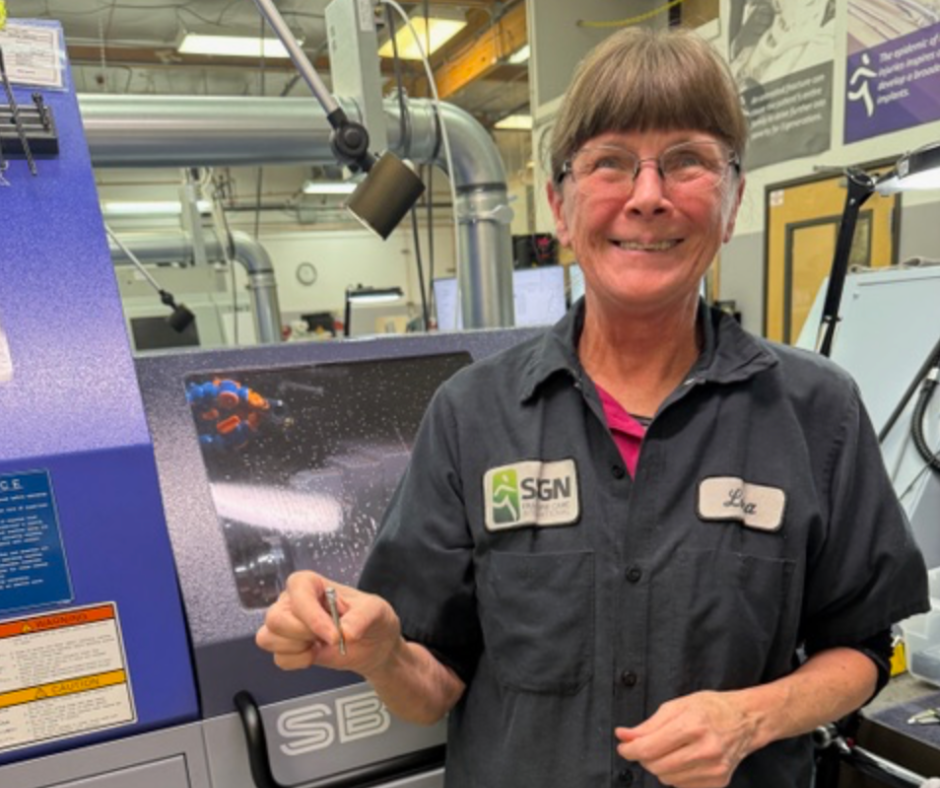 Lana Grieb, Machinist
In many communities, a long-bone fracture can permanently alter the course of a patient’s life. When implants are unavailable, a treatable injury can result in lifelong disability, loss of income, and increased burden on families. SIGN manufactures its own intramedullary nail systems specifically for hospitals that operate without advanced imaging or costly infrastructure. These implant kits are distributed worldwide so that trained surgeons can provide timely, safe fracture care with the tools they need at hand.
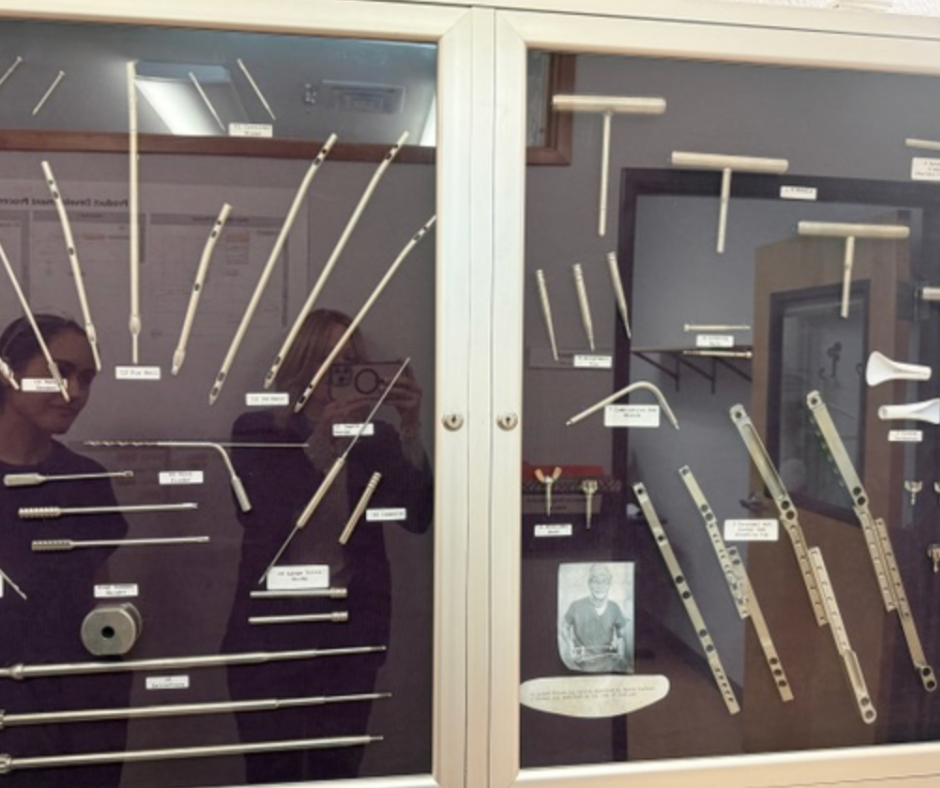
During her visit, Jeanne toured the manufacturing facility where SIGN produces its implant systems, observing the precision, engineering rigor, and quality control behind each device that will ultimately enter an operating room. She also spent time in the bioskills laboratory, where procedures and instrumentation are tested and refined before being used with patients. This deliberate preparation ensures that implants and techniques are safe, reproducible, and realistic for environments where power, imaging, and supplies may be limited. The visit highlighted the full ecosystem that supports global fracture care: manufacturing, training, case review, engineering refinement, and international collaboration.
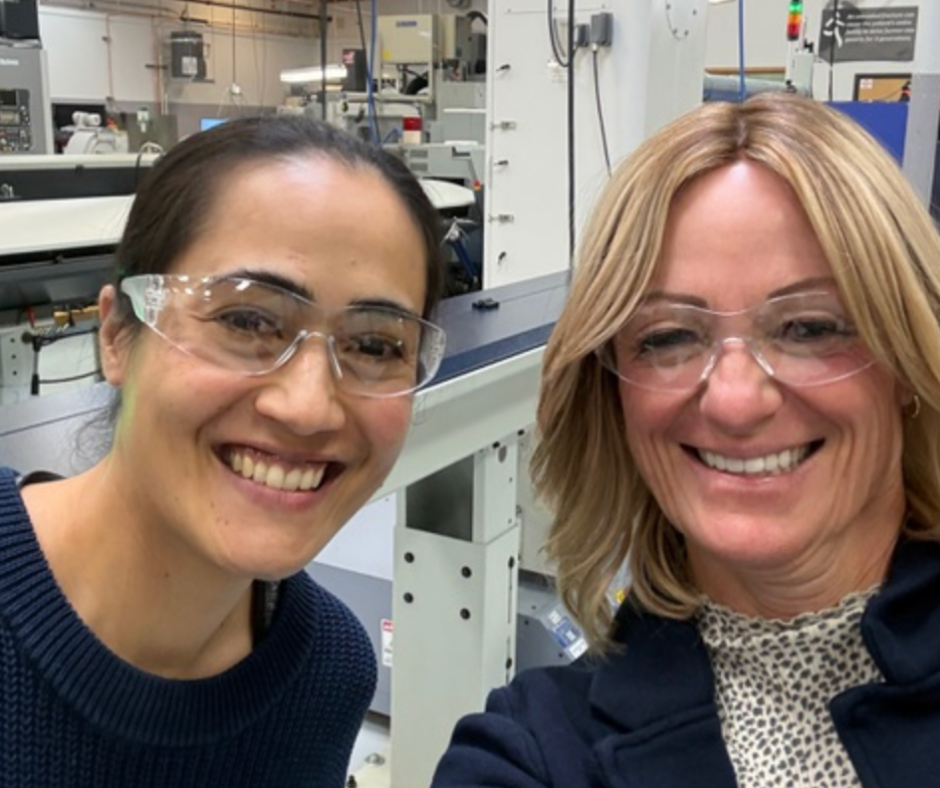 Left: Sariah Khormae SIGN Executive Director, Right: Jeanne Bray (Ohana One Partnerships
Jeanne met with SIGN’s newly appointed Executive Director, Sarah Khormaei, and members of the SIGN team, and connected with founder Dr. Lewis Zirkle, whose vision since 1999 has transformed access to fracture care in low-income countries. As SIGN grew, Dr. Zirkle focused not only on implant design but also on developing surgeon training curricula and traveling globally to teach modern orthopedic techniques. While he no longer travels, he remains closely involved in engineering discussions and continues to review cases through the SIGN Surgical Database, ensuring continuous learning for surgeons everywhere SIGN works.
Nearly 500,000 patients worldwide have regained mobility as a result of SIGN’s efforts. Each case represents more than a healed fracture, it reflects restored independence, renewed livelihoods, and families able to move forward after injury.
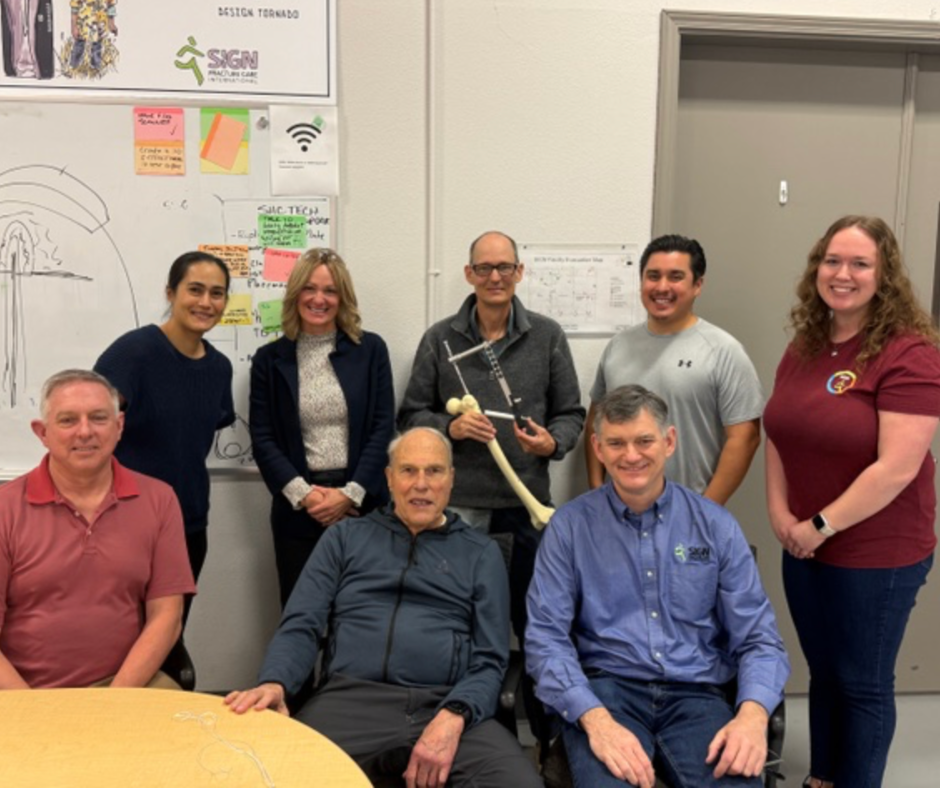 In the back row, starting on your left: Sariah Khormae (SIGN Executive Director) Jeanne Bray (Ohana One - Parnterships) Jon Decker (SIGN Volunteer), Frank Chavarria (SIGN Engineer), Korey McDaid (SIGN Engineer) Front row- starting with Terry Smith (SIGN Engineer), Lewis Zirkle (SIGN President and Founder), Frank Faultersack (Quality Assurance Manager).
This visit underscored a central truth in global health: access to surgery depends on coordinated, sustainable systems. Ohana One strengthens surgical capacity through long-term mentorship, training, and telepresence technology that bring expert guidance directly into local operating rooms. SIGN ensures that surgeons have reliable, context, appropriate implants designed for the realities in which they practice. Together, these complementary efforts make it possible for hospitals in resource-limited settings to perform procedures that might otherwise be out of reach.
When education, technology, and equipment are aligned around the needs of local teams, mobility can be restored, and lives, families, and communities are changed for the better.
Leave a Comment